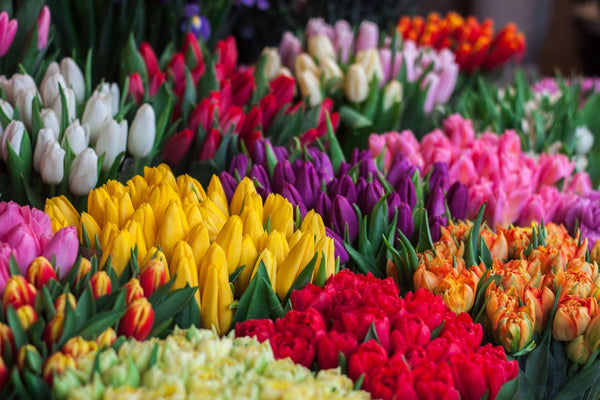
Tulips are commonly associated with love, renewal, hope, and the arrival of spring. Their more specific meaning depends on the flower's color, the occasion, and the relationship between the giver and the recipient. Red tulips can communicate passionate love, while pink tulips express affection and good wishes. Yellow tulips feel cheerful and optimistic, and white tulips may represent purity, forgiveness, or remembrance.
These meanings are useful when choosing a bouquet, but they are not a strict universal code. Flower symbolism has changed across cultures and centuries, and personal preferences often matter more than tradition. This guide explains the history behind the tulip flower, the most widely recognized tulip color meanings, and how to choose an arrangement that sends the right message.
What Does the Tulip Flower Symbolize?
The broadest meaning of tulips is love. Unlike roses, which are often read as an unmistakably romantic gesture, tulips can represent many kinds of love - between partners, family members, or close friends. Their clean shape and vibrant colors allow them to feel sincere without always being formal or intense.
Tulips also symbolize new beginnings. Because they are among the most recognizable flowers to bloom in spring, they have become associated with renewal, hope, and a fresh start. That makes them a thoughtful choice for someone beginning a new job, moving into a new home, welcoming a child, or entering a new chapter of life.
Other common associations include joy, elegance, warmth, and appreciation. The deeper meaning comes from the color and context. A bright mixed bouquet can simply brighten someone's day, while a carefully chosen single-color arrangement can communicate a more specific feeling.

A Brief History of Tulips
Although tulips are strongly associated with Holland today, they did not originate in the Netherlands. Wild tulips are native to a broad region that includes Central Asia. They were cultivated in Persia and became especially important in the Ottoman Empire, where they appeared in gardens, decorative arts, textiles, and poetry.
The name "tulip" is generally linked to a Turkish word associated with a turban, probably because observers thought the flower or the way it was worn resembled the folded headwear. The exact linguistic path is more complicated than the familiar story suggests, so it is best understood as an etymological association rather than a literal botanical name chosen by growers.
Tulips reached Western Europe in the 16th century and quickly became desirable garden plants. Botanist Carolus Clusius helped cultivate and study them in the Netherlands after establishing a botanical garden at Leiden. Interest in rare varieties grew, particularly in flowers with dramatic streaks and flame-like markings.
During the 1630s, speculative trading drove the prices of some rare tulip bulbs to extraordinary levels. The episode became known as Tulip Mania. It is often described as one of history's earliest financial bubbles, although historians continue to debate its true scale and its effect on the wider Dutch economy. What is clear is that tulips became symbols of rarity, beauty, and status before eventually becoming much more widely available.
Today, tulips remain closely connected with Dutch horticulture, but their cultural history stretches well beyond the Netherlands. Their journey from Central Asia through the Ottoman world and into Europe helps explain why the tulip carries a rich tapestry of meanings rather than one fixed definition.
Tulip Color Meanings at a Glance
| Tulip color | Common meaning | Suitable occasions |
|---|---|---|
| Red | Deep love and passion | Romance and anniversaries |
| Pink | Affection and good wishes | Birthdays, gratitude, and congratulations |
| Yellow | Joy, hope, and friendship | Birthdays, thank-you gifts, and just because |
| White | Purity, forgiveness, and remembrance | Apologies, support, and new beginnings |
| Purple | Royalty, elegance, and admiration | Milestones and formal gifts |
| Orange | Energy, warmth, and enthusiasm | Celebrations and congratulations |
| Multicolored | Happiness, variety, and individuality | Birthdays and festive occasions |
The table provides a useful starting point, but the recipient's favorite colors and the tone of the occasion should guide the final choice.

What Do Different Tulip Colors Mean?
Red Tulips - Deep Love and Passion
Red tulips signify deep love, romance, and emotional sincerity. Their passionate color makes them a natural choice for a partner, especially on an anniversary, Valentine's Day, or another romantic occasion. They deliver a clear message without looking exactly like the classic bouquet of red roses.
A full arrangement of red tulips feels confident and intimate. Combining them with white flowers creates contrast and can soften the overall design, while deeper foliage gives the bouquet a more dramatic character. For a new relationship, a smaller arrangement may feel more appropriate than an extravagant display.
Pink Tulips - Affection and Good Wishes
Pink tulips convey affection, caring, and good wishes. Their meaning is warm but usually less intense than that of red tulips, which makes them suitable for friends, family members, coworkers, and romantic partners alike.
They work particularly well for birthdays, Mother's Day, a new baby, graduation, or a new job. Pale pink creates a gentle and graceful arrangement, while brighter pink feels more celebratory. Pink tulips also pair naturally with ranunculus, roses, and other soft seasonal flowers when a mixed bouquet is preferred.
Yellow Tulips - Happiness, Hope and Cheerfulness
Yellow tulips now represent happiness, cheerfulness, hope, and friendship. Their sunny color makes them an easy way to bring a smile to someone's face or add warmth to a home.
Their symbolism has not always been so positive. In older flower language, yellow tulips were sometimes connected with jealousy or hopeless love. Modern gift-giving has largely replaced those associations with joy and optimism. Today, yellow tulips are suitable for birthdays, thank-you gifts, congratulations, get-well wishes, or simply brightening someone's day.
White Tulips - Purity, Forgiveness and New Beginnings
White tulips symbolize purity, respect, forgiveness, and new beginnings. They can be used to make a sincere apology, recognize a religious or personal milestone, or mark a fresh start. Their understated appearance also makes them appropriate for sympathy and remembrance arrangements.
Because white flowers can suit both joyful and solemn occasions, presentation matters. White tulips combined with blush or pale green flowers feel soft and celebratory. A restrained all-white arrangement has a more reflective tone. A personal card helps ensure that the recipient understands the intended message.
Purple Tulips - Royalty, Elegance and Admiration
Purple tulips represent royalty, elegance, dignity, and admiration. The association comes partly from the historical prestige of purple, which was once difficult and expensive to produce as a dye. The color consequently became linked with wealth, ceremony, and high status.
In a modern bouquet, purple tulips communicate appreciation and sophistication rather than literal royal status. They are an excellent choice for celebrating a major achievement, thanking a respected mentor, or giving someone a polished and distinctive arrangement. Pairing them with white or lavender flowers keeps the composition elegant without making it overly formal.
Orange Tulips - Energy, Warmth and Enthusiasm
Orange tulips symbolize enthusiasm, energy, warmth, and a zest for life. They feel expressive and upbeat, making them especially suitable for a birthday, promotion, housewarming, business opening, or personal accomplishment.
Orange sits between the romantic intensity of red and the sunny cheerfulness of yellow. As a result, it can communicate strong appreciation without necessarily feeling romantic. Orange tulips work well on their own or in a vibrant arrangement with yellow, coral, and red accents.
What Do Blue Tulips Mean?
Blue tulips are commonly associated with individuality, mystery, tranquility, and the desire for something rare. However, naturally occurring tulips do not produce a true blue pigment. Varieties marketed as blue are generally lavender, violet, or purple with a cool undertone, while vividly blue cut flowers may have been dyed.
For that reason, blue tulips should not be presented as a common natural color. If the recipient loves blue, a florist can create the impression through purple tulips, complementary flowers, wrapping, or a vase. The result can still communicate originality without making an inaccurate claim about the flower.

Multicolored and Variegated Tulips
A mixed bouquet of different colors feels joyful, generous, and informal. It is often the best choice when the goal is to celebrate rather than communicate one precise emotion. Multicolored tulips suit birthdays, spring gatherings, thank-you gifts, and recipients who simply enjoy vibrant colors.
Variegated tulips have petals marked with stripes, contrasting edges, or flame-like patterns. They are often interpreted as symbols of individuality and admiration. Historically, some of the dramatic broken patterns prized during Tulip Mania were caused by a plant virus. Modern striped varieties are generally produced through selective breeding and should not be confused with those diseased historic bulbs.
How to Choose the Right Tulip Colors
Start with the recipient rather than a symbolism chart. Their favorite color, personal style, and relationship with the giver should come before a traditional meaning. Someone with a minimalist home may prefer a simple vase of white or purple tulips, while someone who loves bold color may enjoy a bright mixed arrangement.
Next, consider the message. Red works when romance should be unmistakable. Pink communicates warmth and affection. Yellow feels friendly and optimistic, while orange celebrates energy and achievement. White can express sincerity, respect, or support, and purple creates a refined sense of admiration.
Finally, think about presentation. A single-color tulip bouquet makes the meaning feel more focused. A combination of several colors is less formal and more celebratory. Adding other flowers can make the arrangement richer, but it may also shift attention away from the tulips themselves.
Tulips for Different Occasions
Birthdays
Pink, yellow, orange, and multicolored tulips are natural birthday choices. They communicate good wishes without imposing an overly romantic meaning. Red tulips can still be appropriate when the birthday arrangement is for a partner.
Romantic Gifts and Anniversaries
Red tulips send the clearest message of passionate love. Pink creates a softer expression of romance and affection. A red-and-white arrangement can combine romantic feeling with sincerity and elegance.
Congratulations and Fresh Starts
Pink, yellow, and orange tulips suit a promotion, graduation, new job, new home, or another beginning. Their connection with spring reinforces the themes of growth, opportunity, and positive change.
Apologies
White tulips are traditionally associated with forgiveness and can support a thoughtful apology. The flowers should accompany honest words rather than stand in for them. White and soft pink together create a gentler and more personal composition.
Sympathy and Support
White, cream, pale pink, and muted purple tulips can create a respectful arrangement. Avoid treating one color as universally required for sympathy, since customs and personal preferences differ. A simple design and an appropriate note are usually more important than following a rigid rule.
Just Because
For a spontaneous gift, choose the recipient's favorite shade or a cheerful mix. Yellow tulips can brighten someone's day, pink expresses easy affection, and a variety of colors makes the bouquet feel relaxed and abundant.
Does the Number of Tulips Change Their Meaning?
The meaning attached to the number of flowers varies between countries and cultural traditions. There is no universal system in which a particular number of tulips always delivers the same message.
For most recipients in the United States, the size of the bouquet communicates the scale of the gesture more clearly than a symbolic number. Color, arrangement style, occasion, and the note included with the flowers are more likely to shape how the gift is understood. When sending flowers to someone from a different cultural background, it is worth checking whether even or odd numbers carry a particular significance for them.
Tulip Season and Availability
Tulips are closely associated with spring in many gardens, with different varieties blooming from early to late in the season. Cut tulips may be available through florists outside their natural local blooming period because professional growers use controlled conditions and international supply networks.
Availability still changes throughout the year. A specific shade or variety may not be obtainable on a particular date, and seasonal substitutions are sometimes necessary. If color is central to the message, confirm what is available before finalizing the arrangement.
How Tulips Behave in a Vase
Tulips behave differently from many other cut flowers. Their stems can continue to lengthen after they are placed in water, and the blooms naturally turn toward sunlight. They may open during the day, respond to changes in temperature and light, and gradually alter the shape of an arrangement.
This movement is part of their character and does not automatically mean the flowers are losing freshness. A tightly structured bouquet can become looser and more expressive over time. For someone who prefers a perfectly fixed design, a florist can suggest a supporting vase or complementary stems that help guide the arrangement as the tulips move.
Choosing a Tulip Bouquet in Los Angeles
When choosing tulips in Los Angeles, consider the occasion, the recipient's preferences, and current seasonal availability. A monobouquet places all the attention on the color and natural shape of the tulips. A mixed arrangement creates more texture and allows the florist to build a broader palette around them.
Red tulips with white seasonal flowers create a polished romantic gift. Pink tulips can be softened with ranunculus or roses, while yellow tulips look fresh with light greenery. Purple tulips pair naturally with white or lavender flowers. For a lively birthday arrangement, a multicolored bouquet may be more personal than following any single traditional meaning.
Turn tulip meanings into a memorable gift. Order tulip bouquets for delivery in Los Angeles in pink, white or purple. For a thoughtful everyday surprise, shop small flower bouquets and send your message with fresh flowers.
Final Thoughts
The meaning of tulips is rooted most strongly in love, renewal, and the optimism of spring. Different colors make that message more specific: red expresses deep love, pink carries affection and good wishes, yellow represents happiness, white suggests purity or forgiveness, purple conveys elegance, and orange celebrates energy and warmth.
These traditions can make a gift more thoughtful, but they should guide rather than limit the choice. The most meaningful tulip bouquet is one that fits the recipient, the occasion, and the message you genuinely want to send.
Frequently Asked Questions
What do tulips symbolize?
Tulips commonly symbolize love, renewal, hope, and new beginnings. Their exact meaning depends on the color and the context in which they are given. Red tulips are associated with romantic love, while yellow, pink, white, purple, and orange tulips carry different meanings.
What do different tulip colors mean?
Red tulips represent deep love and passion. Pink tulips convey affection and good wishes, while yellow tulips symbolize happiness, hope, and friendship. White tulips are associated with purity, forgiveness, and remembrance. Purple tulips suggest elegance and admiration, and orange tulips represent warmth, energy, and enthusiasm.
What color tulips mean love?
Red tulips carry the clearest romantic meaning and are commonly associated with passionate or sincere love. Pink tulips can also express love, but their message is usually softer and may include affection, care, and appreciation.
What color tulips represent friendship?
Yellow tulips are the color most commonly associated with friendship, happiness, and cheerful good wishes. Pink tulips are another suitable choice for a close friend because they communicate affection and care without necessarily suggesting romance.
What color tulips are best for an apology?
White tulips are traditionally associated with forgiveness, sincerity, and respect, making them a thoughtful choice for an apology. Because flower meanings can be interpreted differently, include a personal note that clearly communicates what you want to say.
Are blue tulips real?
Tulips do not naturally produce a true blue pigment. Varieties sold as blue are usually violet, lavender, or purple with cool undertones. Some vividly blue cut tulips may be artificially dyed.
Why are tulips associated with new beginnings?
Tulips are closely associated with new beginnings because many varieties bloom in spring, when gardens return to active growth. This seasonal connection has made them popular symbols of renewal, hope, and a fresh start.
Where did tulips originate?
Wild tulips originated in Central Asia and were later cultivated in Persia and the Ottoman Empire. They reached Western Europe in the 16th century, and botanist Carolus Clusius played an important role in cultivating and studying them in the Netherlands. The name "tulip" is generally linked to a Turkish word associated with a turban.
What was Tulip Mania?
Tulip Mania was a period of speculative trading in the Netherlands during the 1630s, when contracts for some rare tulip bulbs reached extraordinary prices before the market declined. It is often described as an early financial bubble, although historians debate its scale and its effect on the wider Dutch economy.
What did tulips mean in Victorian flower language?
In Victorian flower language, tulips were used to communicate feelings such as love and affection, while individual colors could suggest different sentiments. Interpretations varied between flower dictionaries, so Victorian meanings should be treated as historical conventions rather than a single universal code.
When are tulips in season?
Tulips naturally bloom from early to late spring, depending on the variety and local climate. Florists may carry cut tulips beyond the local growing season, but the available colors and varieties can change throughout the year.


